GLP-1, short for glucagon-like peptide-1, has become one of the most discussed peptide-related topics in modern metabolic research. While many people now associate GLP-1 with recent headlines, the science behind it begins with a naturally occurring hormone that plays an important role in how the body responds to food, glucose, insulin, appetite, and energy regulation.
This article explains what GLP-1 is, how it works, and why it continues to attract strong scientific interest.
What Is GLP-1?
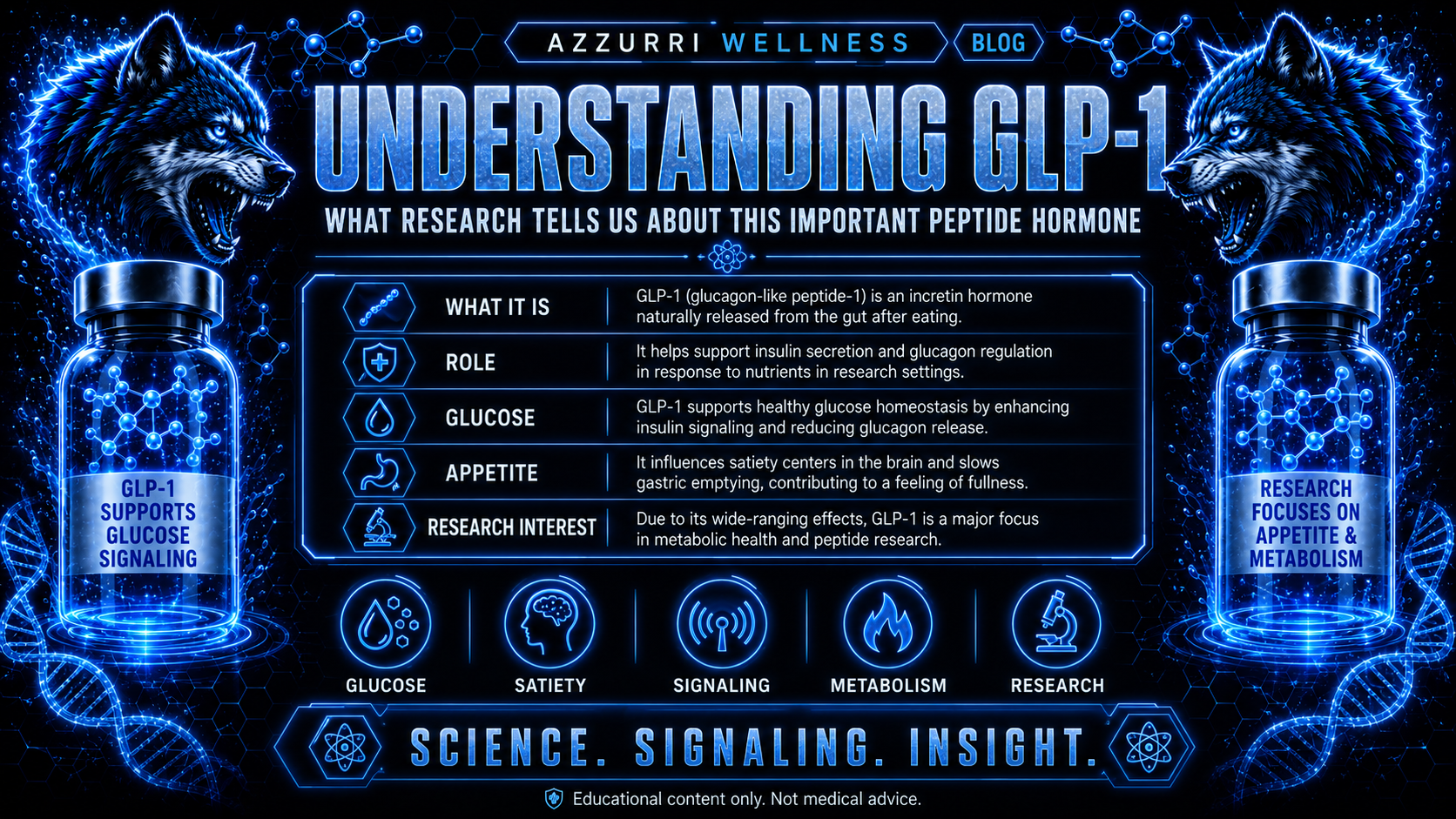
GLP-1 is a peptide hormone produced mainly in the gut after food intake. It belongs to a group of hormones known as incretins, which help the body respond to nutrients after eating.
One of GLP-1's most important functions is its role in glucose regulation. After a meal, GLP-1 helps signal insulin release when blood glucose levels are elevated. This glucose-dependent action is one reason GLP-1 has been studied so closely in metabolic science.
Researchers have also found that GLP-1 does more than influence insulin. It is considered a pleiotropic hormone, meaning it has multiple biological effects across different systems in the body.
How GLP-1 Works in the Body
GLP-1 acts through the GLP-1 receptor, which is found in several tissues. When GLP-1 binds to this receptor, it can influence different biological pathways.
Research has connected GLP-1 activity with several key areas:
- Glucose-dependent insulin secretion
- Glucagon regulation
- Gastric emptying
- Appetite and satiety signaling
- Body weight regulation
- Cardiovascular and metabolic research interest
This broad range of activity helps explain why GLP-1 has become such a major topic in metabolic-health research.
GLP-1 and Insulin Signaling
One of the best-known effects of GLP-1 is its role in insulin secretion. After food is consumed and blood glucose rises, GLP-1 can help pancreatic beta cells release insulin.
This does not mean GLP-1 acts like insulin itself. Instead, GLP-1 helps signal the body to respond appropriately after nutrient intake. Its insulin-supporting effect is especially important because it is largely glucose-dependent, meaning the effect is stronger when glucose levels are elevated.
This mechanism is one reason GLP-1 receptor agonists have been investigated so widely in metabolic research.
GLP-1 and Glucagon
GLP-1 also affects glucagon, another hormone involved in blood sugar regulation. Glucagon generally raises blood glucose by signaling the liver to release stored glucose.
In research settings, GLP-1 has been shown to help suppress glucagon secretion when glucose levels are high. This contributes to its overall role in glucose balance.
Together, the effects on insulin and glucagon make GLP-1 an important hormone in post-meal metabolic regulation.
GLP-1, Appetite, and Satiety
Beyond blood sugar signaling, GLP-1 is also involved in appetite signaling. Researchers have studied how GLP-1 can influence satiety, food intake, and signals between the gut and brain.
This area of research has become especially important because GLP-1 receptor agonists are now widely discussed in relation to body weight and metabolic health. However, it is important to separate the natural hormone GLP-1 from engineered GLP-1-based compounds, which are specifically modified for longer activity.
Why Natural GLP-1 Has a Short Half-Life
A key challenge with natural GLP-1 is that it breaks down very quickly in the body. The enzyme DPP-4 rapidly degrades GLP-1, giving native GLP-1 a very short half-life.
Because of this, scientists developed GLP-1 receptor agonists that are modified to last longer and remain active for extended periods. These modified compounds are different from naturally occurring GLP-1 and are designed for specific research applications.
This is one of the reasons GLP-1 research connects peptide biology with molecular design, stability, and duration-of-action studies.
GLP-1 Receptor Agonists
GLP-1 receptor agonists are compounds designed to activate the GLP-1 receptor. This class has been investigated extensively in metabolic research and includes engineered peptides that are modified versions of the natural hormone.
These compounds are not identical to native GLP-1. They are designed to resist rapid breakdown, improve duration of action, and produce useful receptor activation.
Because these are specialized compounds, they should only be used under appropriate professional supervision.
Why GLP-1 Attracts Research Interest
GLP-1 attracts scientific interest because it sits at the intersection of several important biological systems:
- Metabolism
- Appetite regulation
- Glucose homeostasis
- Hormone signaling
- Peptide stability
- Receptor biology
- Molecular-design research
Researchers continue to study GLP-1 because its effects go beyond its original identification as an incretin hormone. Scientific reviews describe GLP-1 as having metabolic functions that extend well beyond classical incretin activity.
GLP-1 and the Future of Peptide Research
GLP-1 has helped demonstrate how peptide hormones can be studied, modified, and translated into new research areas. Its story shows why peptide science is such an active field: small molecular changes can influence stability, receptor activity, half-life, and biological response.
For peptide researchers, GLP-1 is a valuable example of how structure, function, and duration all matter. Understanding GLP-1 also helps explain broader topics in peptide science, including receptor targeting, enzymatic breakdown, and synthetic peptide design.